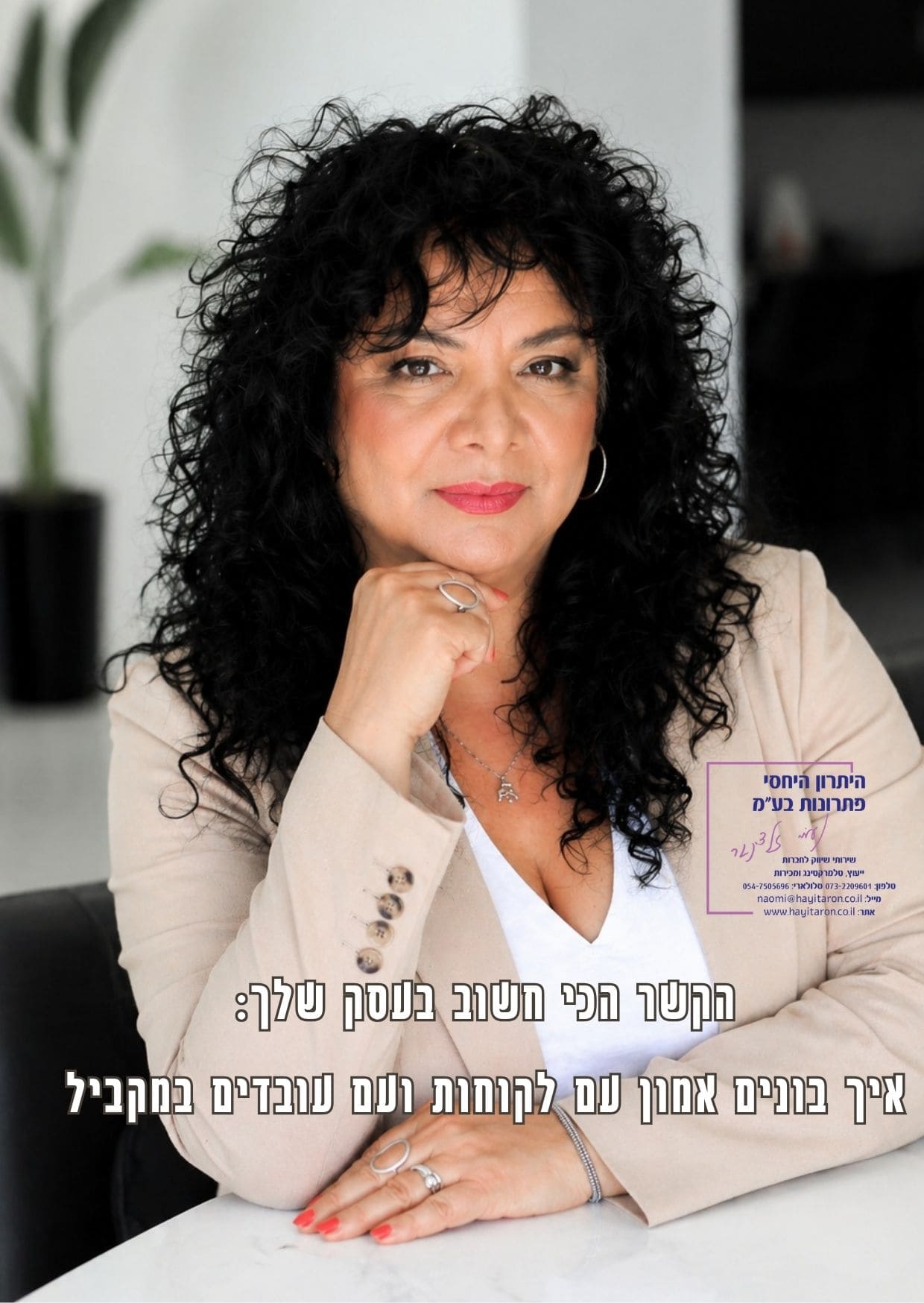
Outsourcing Model 2026: An Analysis of the Trends Shaping the
Israeli Market🔴
The year 2026 marks a watershed moment in organizational management in Israel.❗
What began as a “cost-saving” measure has become a core strategy
for the leading organizations in the economy. From law firms and luxury real estate
to technology companies and defense industries, the question is no longer
“Should we outsource?” but rather “How do we do it right?”
Here is an analysis of the key factors driving this change🔴
1. The shift from technical selling to relationship management in a world of
information overload and AI, the Israeli customer is looking for human connection. Companies
today understand that the sales or service department is not merely a “cost
center.” It is the DNA of the brand. The shift to Outsourcing Model 2026
allows organizations to use teams that undergo dedicated training in building
trust, listening, and precision. It is not just about “closing a deal.” It is about creating
a customer who stays for years.
2. The workforce crisis and the flexible response. The greatest challenge of 2026
is stability. Employee turnover (Churn) in in-house departments drains
the organization of enormous management resources. Recruitment, training, sick days
and sudden departures create “gaps” in business continuity. Professional outsourcing
provides the organization with resilience: responsibility for continuity shifts
to the expert provider. The business keeps moving at full capacity, under all
circumstances, without dependence on any specific employee.
3. The Precision Economy: the transparency of “pay by results.” In the
old model, the true cost of an in-house department was “transparent”:
office space and municipal taxes. Social benefits and contributions. Management
time of senior executives. In 2026, CEOs prefer the
“Precision Economy”: a fixed expense, known in advance, that can be measured against
actual results. This is economic savings that stems from efficiency, not from cutting
service levels.
4. Specialization as the Core Business (Business Core). An organization specializing
in finance, real estate or technology should invest most of its energy
in developing its product and vision. Turning the sales and service operation
into an external department allows senior management to “lift its head.”
To focus on strategy. To lead the market. And to leave the day-to-day
contact with customers in the hands of those for whom this is their sole profession.
Summary of the Trend: Outsourcing Model 2026 is no longer just a
logistical solution. It is a statement of professionalism. Organizations that choose external
expertise gain stability, precision in results, and peace of mind.
This is the model that allows an organization to grow without losing the human connection
with the customer.
We are “The Relative Advantage” — Lower Costs – Better Results
www.hayitaron.co.il